Oman’s Food Security Fortress: How Agritech Innovation Is Feeding the Future
From Importer to Powerhouse: The Agritech Icons Feeding the Future
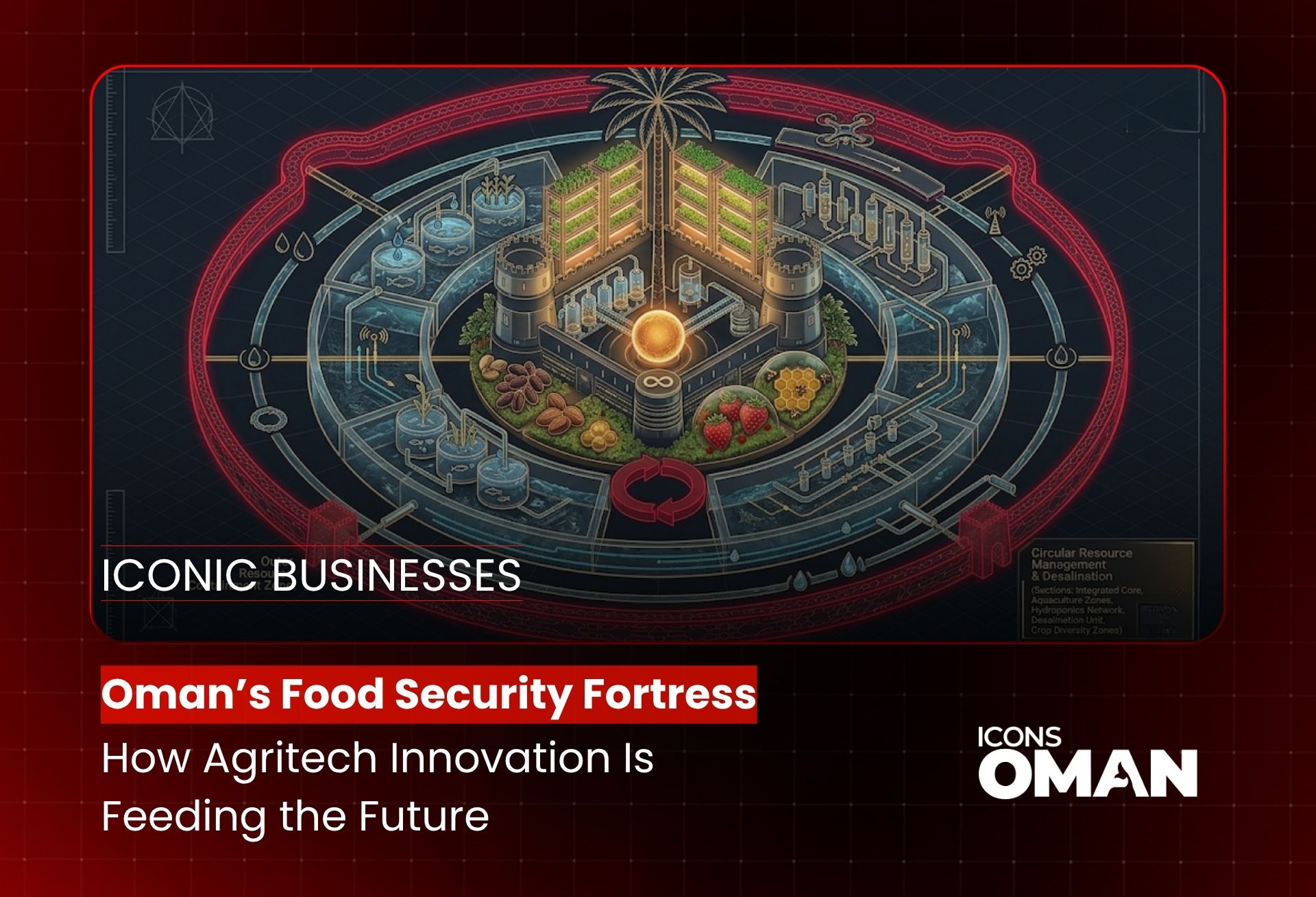
Oman has reached a historic tipping point in 2026. Under the new FAO-Oman Cooperation Plan (2026–2030), the Sultanate is successfully transforming its rugged terrain into a “Food Security Fortress.” The goal is no longer just to survive—it is to lead the region in high-efficiency, climate-smart food production.
The Blue & Green Shield
Leading the charge is Nitaj (Oman Food Investment Holding Company), which has integrated IoT-driven “Smart Farms” across the Batinah and Dhofar regions. By merging ancient Aflaj water wisdom with modern hydroponics, Oman is reducing its reliance on food imports at a record pace.
| 2020 Standard | The 2026 “Iconic” Standard |
| Heavy Reliance on Food Imports | 60%+ Self-Sufficiency in Poultry & Dairy |
| Seasonal Open-Field Farming | Year-Round AI-Controlled Vertical Hubs |
| Traditional Fishing Methods | High-Export Aquaculture (Abalone & Shrimp) |
| Water Scarcity Constraints | Advanced Desalination-to-Farm Pipelines |
The “Trend” to Watch: The Rise of “Omani Premium”
In 2026, Omani agricultural products—specifically strawberries, organic honey, and premium dates—are becoming global luxury icons. The trend is Traceability. Using Blockchain, international buyers can scan a QR code on an Omani-grown product and see its entire journey from a sun-drenched Salalah farm to their table in London or Tokyo.
Key Takeaways for Omani Industrialists:
- Technology is the New Water: Use sensors and AI to make every drop count.
- Value-Added Exports: Don’t just sell the crop; sell the processed, branded, and “Iconically Omani” product to maximize ROI.